
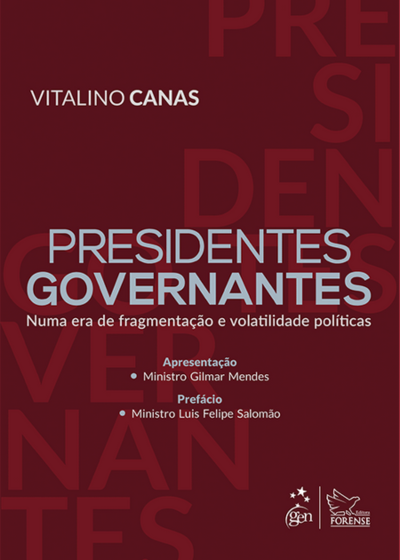
In times of constant and rapid change, this book emerges as more than an indispensable manual for students and scholars of comparative constitutional law, political science, and comparative politics, presenting a vivid portrait of the past, present, and future prospects of political institutions.
Presidentes Governantes brings up the systems of government and puts 37 countries under the microscope, observing the latest trends in the predisposition to delegate power to single-person bodies, but also to install new forms of power limitation resulting from the growing need for coalitions to ensure governability.
By examining the nuances of the systems, as well as the complexity and intricacies of the political game, the work invites us to reflect on what lies ahead. Questioning the ability to preserve democracy in the future requires understanding the institutional configurations of states in the contemporary world.
Even though political arrangements are renewed and adapted, they do not always manage to keep pace, in a harmonious way, with reality, which is constantly changing. We are left with the question: are institutions in the 21st century resilient enough?
The structure of the book makes its chapters a valuable compilation, revealing an overview of the state of democratic institutions today.
Furthermore, it presents the category of governing presidents, going beyond the analysis of the presidential system and unveiling the modalities and transformations in the role of presidents and the power they exercise. Finally, this is a work that aims to share with the reader both knowledge and concerns about the challenges faced by states in the current scenario. Strong leaders are nothing new in history; however, the possibility of subversion of the structures of the democratic rule of law by these actors should remain a warning to those who cherish constitutional and democratic values.