

The scope of this text is to analyze discretion in the administrative decision procedure based on the principle of administrative impartiality, and intends to outline the way in which this operates for the correct performance, in Law, of the function of the competent agent, and, by implication, how the control of such exercise by the Judiciary operates in terms of the limits of the power to invalidate the result of the decision-making activity without invading a field outside its limits of action. In this endeavor, it classifies and develops reflections regarding the weighting defects, both in terms of the acquisition of material to consider, as well as the selection of relevant and irrelevant interests in the weighting procedure, those being the absence of weighting and the deficit of weighting material , while these are the negative deviation and the positive weighting deviation. In the end, it seeks to define supporting premises of what is a relevant fact or interest in the decision-making activity, in order to observe respect for the principle of impartiality. Thus, it develops techniques for verifying the ability to influence an interest in the result of the weighting, just as it does in relation to prognosis about the ideal action.
Home > Publications > Imparcialidade administrativa e controlo jurisdicional da decisão
PUBLISHING | ARTICLE
Theory and Philosophy of Law
Imparcialidade administrativa e controlo jurisdicional da decisão
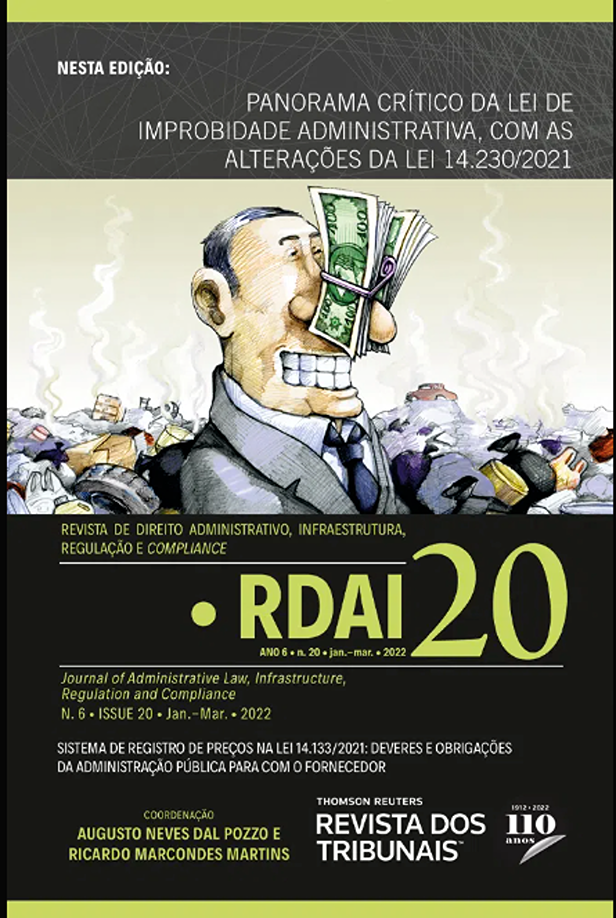
Book title / Magazine:
Revista de Direito Administrativo e Infraestrutura
Revista de Direito Administrativo e Infraestrutura
External Author(s):
David Duarte
David Duarte
Within the scope of the Project:
Lisbon Legal Theory
Lisbon Legal Theory
Bibliographic reference:
DUARTE, David: “Imparcialidade Administrativa e Controlo Jurisdicional da Decisão”. Revista de Direito Administrativo e Infraestrutura, 20, pp. 2227-264, 2022.
DUARTE, David: “Imparcialidade Administrativa e Controlo Jurisdicional da Decisão”. Revista de Direito Administrativo e Infraestrutura, 20, pp. 2227-264, 2022.
Research Group(s):
Theory and Philosophy of Law
Theory and Philosophy of Law
Year: 2022